For ́Geknetete Stadt (Kneaded City) ́, Jankowski worked with a group of school children to create a dailogue between the younger generation and the city they live in.
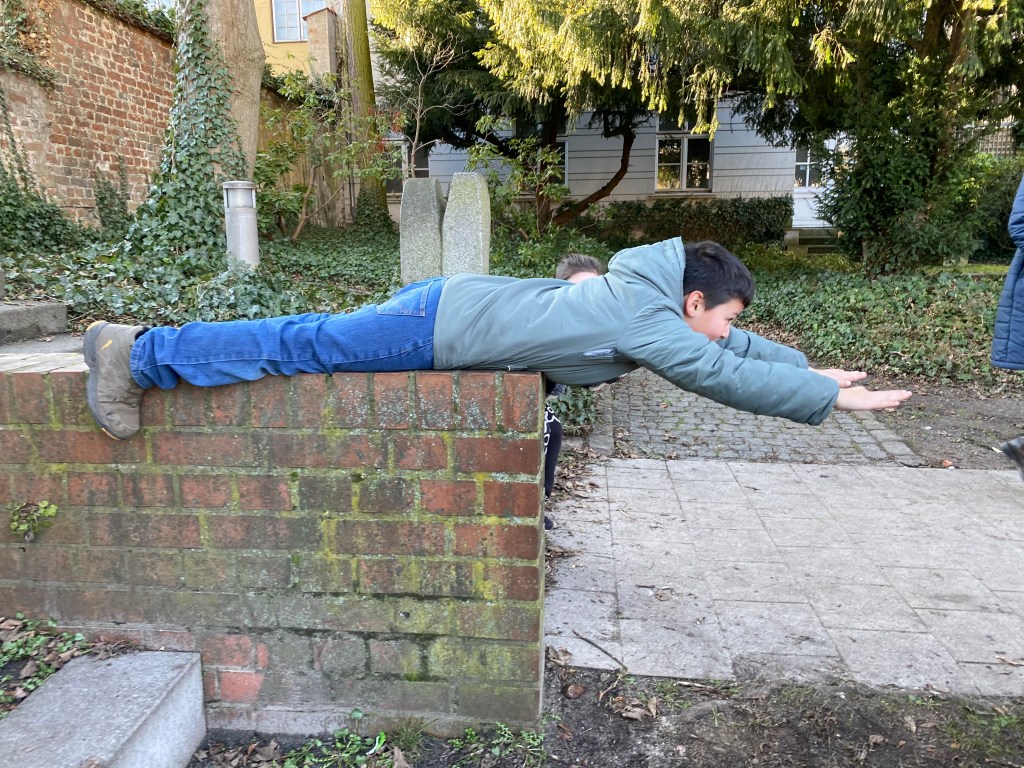
In the first stage Jankowski takes the children on a walk where they were asked to change their status from human to object. In a performative act they freeze in poses representing stairs, benches, gates and other objects of their choice. These situations were photographed and taken as starting points for discussions in the classroom.
The aim was to create an awareness of the fact that, as a part of society, they can be an extension of the city. Together they discussed the architecture and objects of the cityscape, what is important to younger people and what is underrepresented. The visual appearance of a city reflects socially relevant phenomena and therefore reveals specific moments in time. Through their conversation it emerged that current topics such as a clean environment, new types of education or developments in medicine are important factors in the reality of the pupils’ lives and futures.
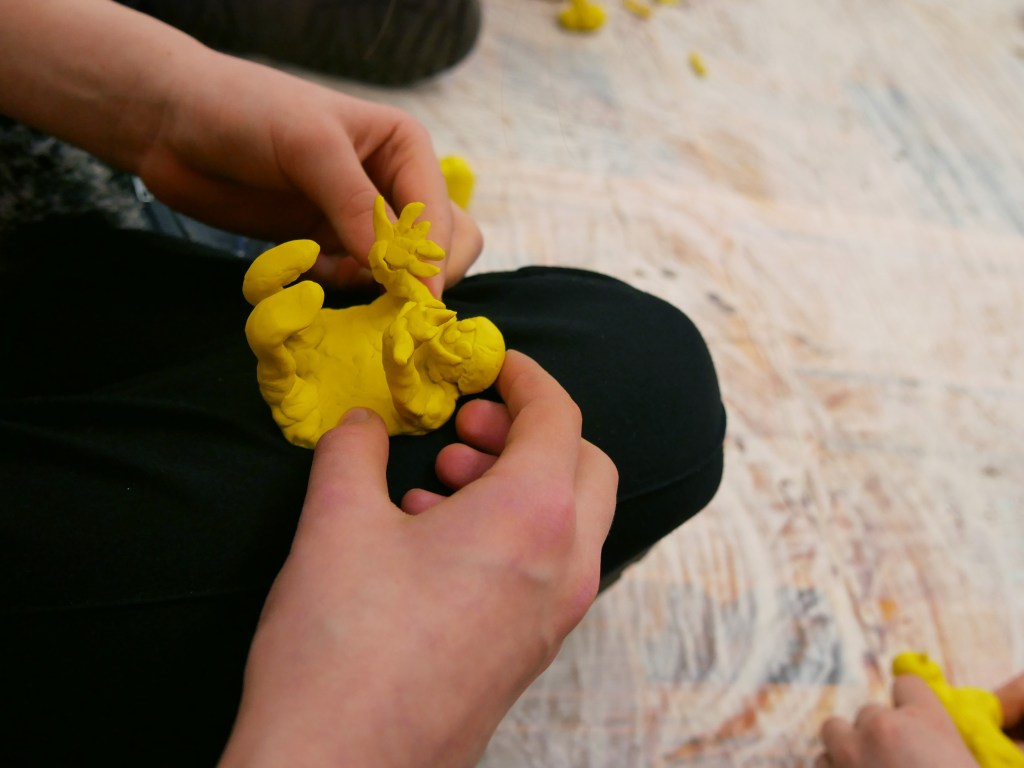
In a workshop setting, they developed selfportraits of themselves as these city objects out of playdough. Each sculpture is accompanied by a phrase written by the child describing their chosen object, its purpose and symbolic meaning, for example, ‘A letter box for free medication’ or ‘A step to a remodel the education system’.
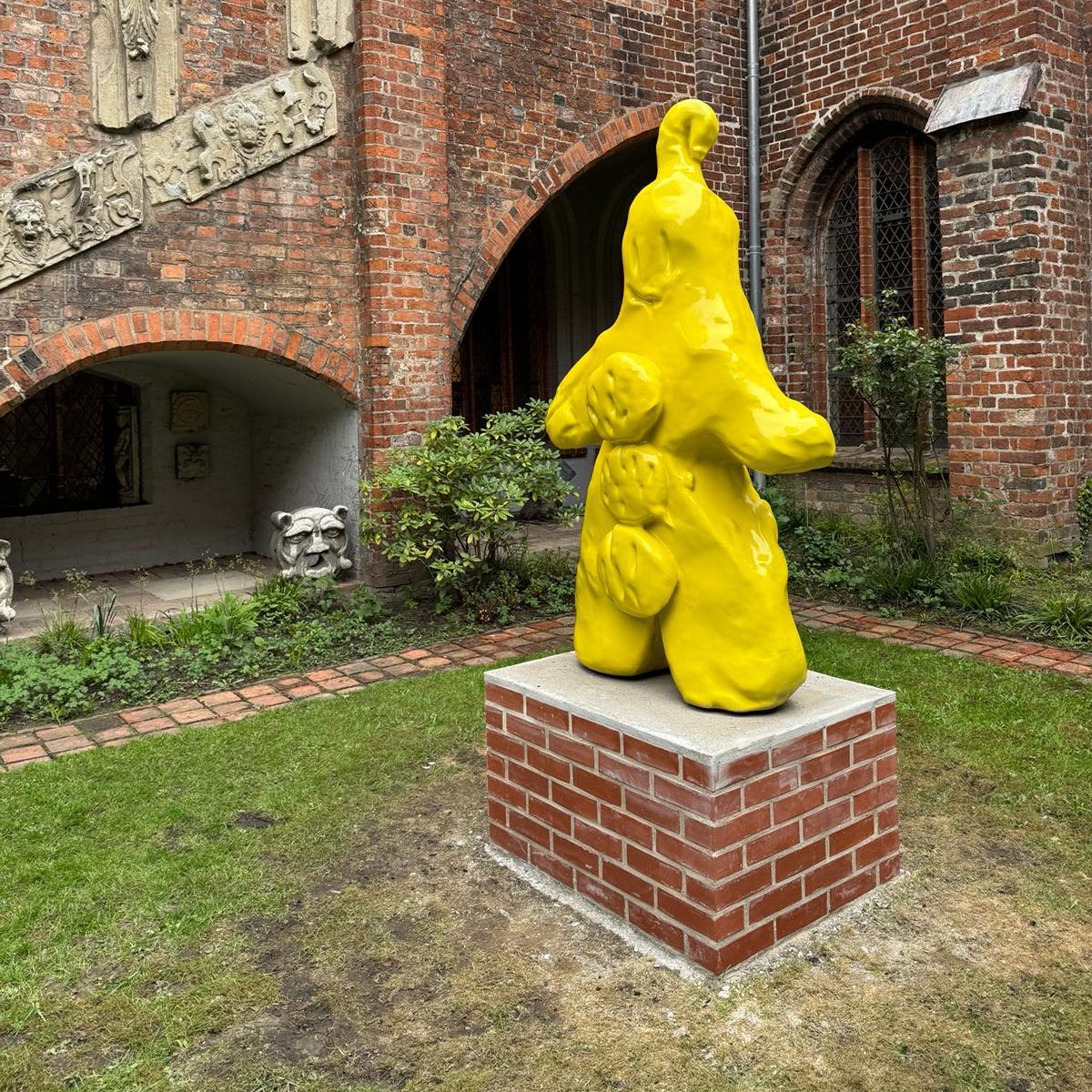
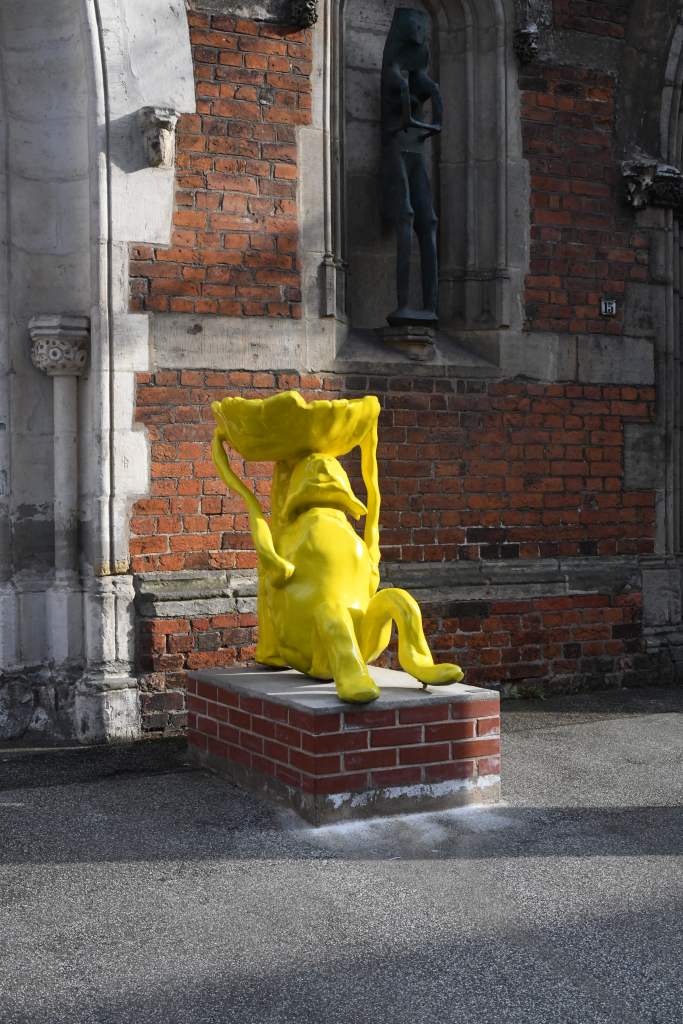
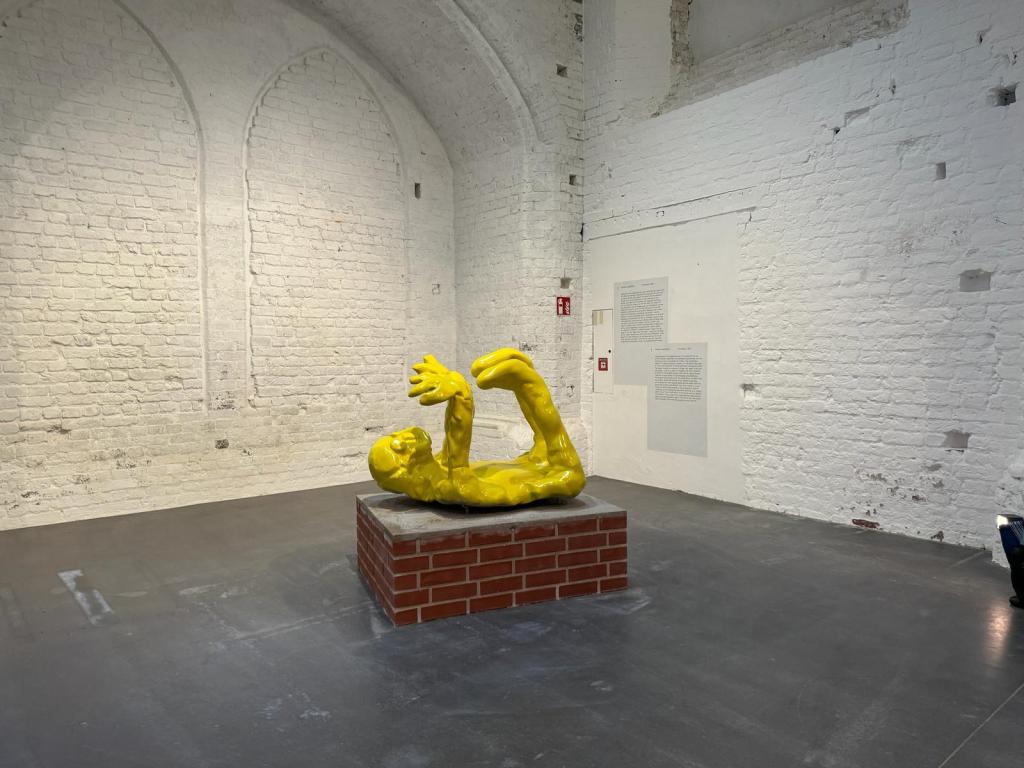
Jankowski then worked with a foundry to enlarge the small sculptures in brass, scaling some even to human size. After they were lacquered in the colour of the original yellow playdough. The enlargement and transfer to a different material lends the works a certain monumentality and in this way also enhances their cultural significance.
22 of these sculptures that stimulated the most discussion were selected to be shown in the exhibition “Hallo Lübeck. Dialoge mit der Kunsthalle St. Annen” in 2023. The works were shown on brick pedestals which references what is needed to physically create a city and how the inter-generational inheritance of a place can often be ignored, leaving damage and waste for the younger generation to fix.

 Christian Jankowski